
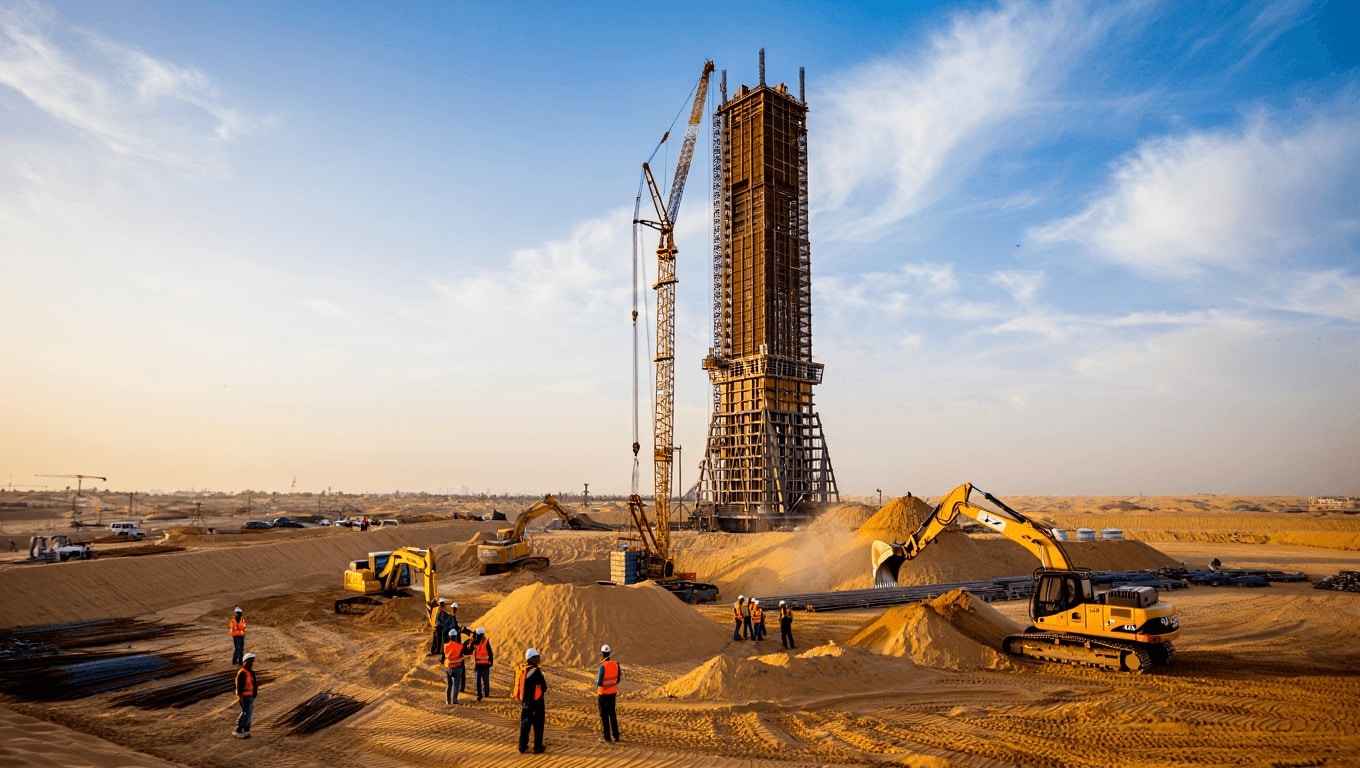
Egypt has quietly been pushing forward with one of the most ambitious urban experiments on the continent: carving a brand-new city out of desert and crowning it with a supertall tower roughly 1,312 feet high. If completed as envisioned, the project would reshape where Egyptians live, work and invest—and test whether top-down masterplans can solve chronic overcrowding and infrastructure strain in Cairo.
Planners describe the development as more than a single tower; it’s a new administrative and financial hub meant to relieve Cairo’s pressure while signaling a long-term pivot toward modern, planned urban growth. For residents, investors and policymakers, the stakes are practical and immediate: housing supply, traffic patterns, public services and the government’s fiscal exposure.
A quick snapshot of the plan
- Location: a planned city built on desert land east of Cairo, designed to host government offices and new residential districts.
- Anchor structure: a proposed skyscraper of about 1,312 feet, intended as a skyline-defining centerpiece and a regional landmark.
- Purpose: to relocate administrative functions, stimulate private investment, and create new housing outside congested urban cores.
- Scale: the masterplan envisages mixed-use neighborhoods, parks, transport links and sizable infrastructure works.
The government frames the city as a pragmatic solution: current metropolitan Cairo faces chronic traffic jams, stretched utilities and land-use inefficiencies. By creating a new node with dedicated ministries, business districts and residential zones, planners hope to redistribute population growth over several decades.
Why the skyscraper matters
At face value, the tall tower is symbolic: a visible sign of ambition meant to attract global attention and private capital. But its implications reach beyond aesthetics. A building of that height demands advanced engineering, stable financing and reliable utilities—elements that test the viability of the wider project.
Those involved argue the tower will house offices, hotels and observation spaces that boost tourism and business activity. Critics counter that a supertall alone won’t solve deeper questions about demand, affordability and long-term maintenance.
In other words, the skyscraper is both a marketing device and a stress test for the city’s fundamentals.
Practical challenges and open questions
Large-scale desert urbanization raises predictable—and some less obvious—challenges. Water supply and sustainable energy are immediate concerns in a region already stressed by climate variability. Transportation links need to move more than ceremonial delegations: a true shift of population centers requires reliable rail, road and public transit connecting old and new capitals.
Financing is another critical factor. Governments in emerging markets often blend public funds, sovereign-backed loans and private partnerships to deliver megaprojects. That mix can create momentum, but it also exposes national budgets if assumptions about occupancy and investment fail to materialize.
Finally, social acceptance is not guaranteed. People relocate for jobs, schools and everyday accessibility—not skyline views. The project’s success depends on delivering services and economic opportunities that make moving worthwhile for ordinary families, not just public servants and developers.
What to watch next
Key indicators to follow in the coming months and years include construction milestones, the status of financing agreements, announcements from major international tenants or investors, and how transport and utility networks advance.
Equally important will be independent analysis of the city’s environmental footprint and measures to ensure that new developments do not simply replicate the social and economic divides found in many rapidly built urban areas.
Perspective
Planned cities have a mixed track record globally. Some—when paired with realistic financing and integrated public services—deliver measurable relief to overcrowded metros. Others become underused enclaves, emblematic of misplaced ambition. Egypt’s desert city will likely be judged less by the height of its tower than by whether it offers affordable homes, functioning transit and stable public services that benefit everyday citizens.
For now, the scheme commands attention because it crystallizes a broader policy choice: investing in grand infrastructure as a catalyst for growth versus channeling limited public resources into incremental upgrades across existing urban neighborhoods. The coming years should reveal which approach yields more tangible improvements for Egyptians.
Watch for government progress reports and independent studies; they will be the clearest signals of whether this plan is transformative—or simply another high-profile building project on a desert skyline.
Similar Posts
- Jeddah Tower tops 100 floors: now racing to a 3,280-foot height by 2028
- Floating city resumes life: home to 80,000 with stadium, schools and 8 helipads
- World’s largest floating city reopens: 80,000 residents, stadium, schools and eight helipads
- World’s biggest floating city resumes operations: homes, schools and helipads for 80,000
- Secret Service Uncovers Underground Network: Could Cripple NYC’s Infrastructure!

Calvin Baxter is an economic analyst specializing in the evolving US labor market. He leverages real data to provide you with concrete recommendations and help you adjust your professional strategies.