
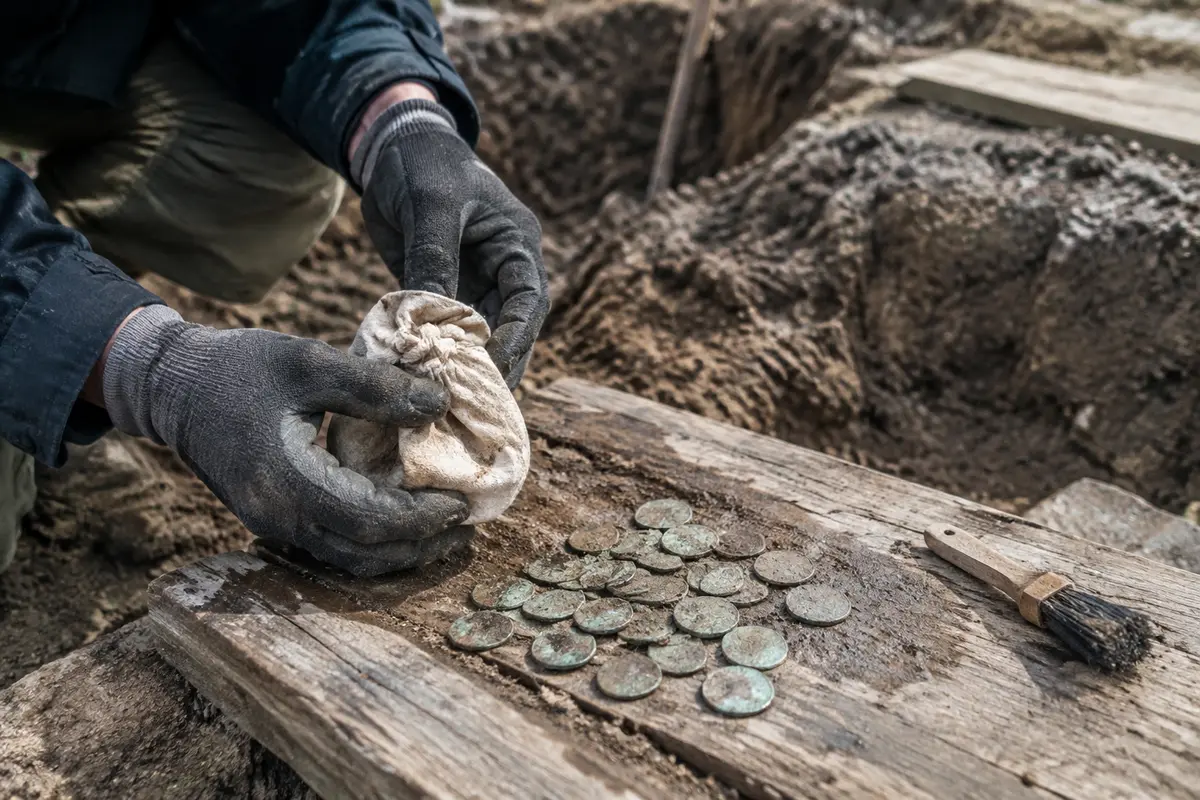
Workers excavating a kitchen foundation in Marblehead, Massachusetts, recently uncovered an unexpected treasure: a cache of 82 gold and silver coins from nine different countries. Experts say the find — now being called the Marblehead Hoard — includes a rare 1764 Mexican gold coin that appraisers value at up to $10,000.
The discovery surfaced during routine construction work on a private property. The coins were bundled together and wrapped in what appears to be a cloth or leather pouch, prompting local officials and numismatists to treat the find as both an archaeological and historical matter.
What was found
The collection spans multiple eras and likely several continents, suggesting it accumulated over time rather than all being minted at once.
- Count: 82 coins in total
- Composition: Gold and silver pieces
- Geographic diversity: Coins traceable to nine countries
- Headline piece: A 1764 Mexican gold coin — appraised at up to $10,000
- Context of discovery: Unearthed during digging for a kitchen foundation in Marblehead
Not every coin has been fully cataloged yet. Specialists are still cleaning and conserving the pieces to confirm mint marks, dates and provenance. That work will shape the historical narrative the hoard can reveal.
Why this matters now
At face value the find is a notable windfall for collectors. But its broader importance lies in what the coins can tell historians about commerce, migration and daily life in past centuries.
Coins from multiple countries in a single stash often point to long-distance trade, maritime activity or a household that accumulated foreign currency over decades. Marblehead’s seafaring history — as a fishing and shipping center from colonial times onward — makes the location especially meaningful for interpreting the hoard.
For residents and historians, the discovery raises practical and legal questions about ownership, preservation and display. Museums and private collectors both show interest in such finds, and the next steps typically involve formal appraisal, documentation and possible conservation by specialists.
What happens next
Local authorities and the property owners are coordinating with numismatists to inventory and authenticate the coins. That process usually includes: careful cleaning, identification of mint marks, laboratory analysis if needed, and a formal appraisal.
Decisions about public access or sale depend on the owner’s wishes and applicable state rules. Institutions that might express interest include regional museums, historical societies and specialist collectors; each could offer different paths for the hoard’s long-term care.
For now the find remains under review. Curators and coin experts say the eventual reporting of detailed provenance, mint origins and the range of dates will determine both the historical value and potential market value of the pieces.
Updates are expected as specialists complete their work and more information about the coins’ origins emerges.
Similar Posts
- Find a Fortune in Your Pocket: $20 Coin Could Fetch $1.3 Million!
- Roman denarii: 934 coins unearthed near Cologne in Germany’s largest Hadrian-era hoard
- $40K Reward Hidden in a Penny: Find the Clue on the Coin’s Front Side!
- Roman gold hoard uncovered in Luxembourg field: hidden fortification buried for 1,600 years
- $80 Million Coin Collection? Find Out How to Spot Rare Coins Now!

Calvin Baxter is an economic analyst specializing in the evolving US labor market. He leverages real data to provide you with concrete recommendations and help you adjust your professional strategies.