
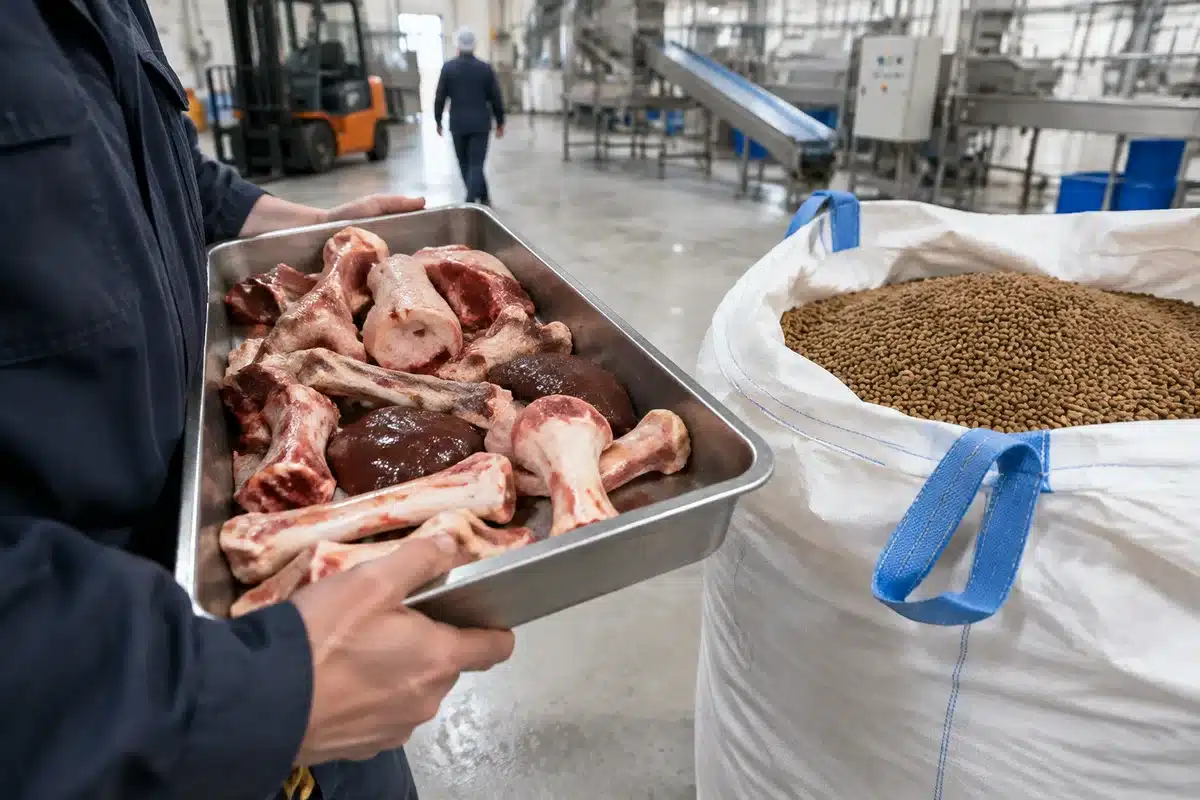
Norwegian salmon farms have recently started feeding some fish with rendered poultry parts that people don’t eat, and the company behind the change says swapping these by-products into feed could lower the feed’s carbon footprint by as much as 16 percent. But the presence of wild-caught fish in the recipe complicates any simple sustainability claim, raising fresh questions about what “lower carbon” — and “sustainable” — really means for seafood buyers today.
Producers say using rendered poultry material—leftover bones, offal and other parts not destined for human tables—lets them replace ingredients that are more carbon-intensive or compete with human food supplies. That argument appeals to both climate-concerned consumers and companies under pressure to shrink emissions from aquaculture.
Still, many commercial feeds still include some amount of fishmeal and fish oil derived from wild-caught forage fish. Those ingredients can carry environmental and stock-management impacts that are not captured by a simple percentage drop in feed emissions. The net effect depends on how much wild fish is used and how that catch is managed.
What the shift actually does — and doesn’t — mean
Lifecycle assessments of feed are complex. Replacing human-inedible poultry residues can reduce the portion of emissions allocated to feed production, but lifecycle gains are sensitive to multiple variables: transport distances, rendering practices, and whether the poultry by-products would otherwise be landfilled or processed for other uses.
Equally important: when a feed still contains wild fish inputs, improvements in one ingredient can be offset by the ecological costs of fishmeal sourcing. Experts and auditors say transparent, independently verified data are needed before claims of improved sustainability can be fully trusted.
- Lower greenhouse gases: Rendered poultry residues typically have lower per-kilo emissions than some plant proteins or specially produced oils when repurposed, potentially reducing feed-related emissions.
- Resource efficiency: Using parts of animals that are not eaten by people can be seen as circular, making better use of existing supply chains.
- Wild fish trade-offs: Continued reliance on fishmeal and fish oil ties farmed salmon to wild fisheries, with ecological and management consequences that carbon numbers alone don’t reflect.
- Verification needed: The exact emissions reduction depends on feed formulation, sourcing, and whether the poultry residues would otherwise go to another beneficial use.
What consumers and buyers should watch
If you buy Norwegian farmed salmon, the sustainability story is becoming more nuanced rather than simpler. Labels or producer statements about a lower carbon footprint should ideally be backed by:
- independent lifecycle assessments that include feed production and sourcing;
- clear disclosure of fishmeal and fish oil percentages;
- traceable sourcing for wild-caught inputs and any relevant fishery certifications or management standards;
- third-party audits of rendering and transport emissions tied to poultry by-products.
Retailers and institutional buyers face immediate implications. Procurement policies that prioritize emissions reductions may need to add criteria about wild fish dependence and ecosystem impacts to avoid shifting harm from one area to another.
| Feed scenario | Primary change | Likely benefit | Key uncertainty |
|---|---|---|---|
| Conventional feed | Higher reliance on plant proteins and fishmeal | Established supply chains | Greater carbon allocation to some ingredients |
| Poultry-byproduct-inclusive feed | Partial substitution with rendered poultry residues | Producer-claimed reduction in feed carbon footprint (up to ~16%) | Effect depends on fishmeal share and sourcing |
From a policy angle, the development underlines the limits of single-metric claims. A lower-carbon feed is a meaningful step, but regulators and standards bodies increasingly emphasize multidimensional sustainability — including biodiversity, stock status for forage fish, and social impacts in fishing communities.
Industry observers say this is part of a broader trend: aquaculture feed manufacturers are experimenting with alternative and circular inputs to cut emissions and costs. Some innovations use insects, algae, or microbial proteins; others turn to side-streams from other food industries, as in this poultry example. Each alternative has trade-offs that need evaluation beyond headline percentages.
For readers, the takeaway is practical: reported emission reductions in a feed formula are worth noticing, but they’re not an automatic all-clear on sustainability. Ask whether claims are independently verified, how much wild fish remains in the recipe, and what happens to the poultry residues if they’re not used in feed. Those details will determine whether this looks like a true step forward or merely a reshuffling of environmental impacts.
Similar Posts
- Black Bear Crashes California Zoo: Finds Companionship with Resident Bears!
- Wolves Turned Into Dogs for Snacks: How Our Furry Friends Evolved
- Green economy exceeds $10 trillion: now rivals the world’s third-largest industry
- Chimps Catch On to Latest Craze: Butt Grass Is the New Trend!
- Speeding trims commute time by mere seconds, study finds

Calvin Baxter is an economic analyst specializing in the evolving US labor market. He leverages real data to provide you with concrete recommendations and help you adjust your professional strategies.