
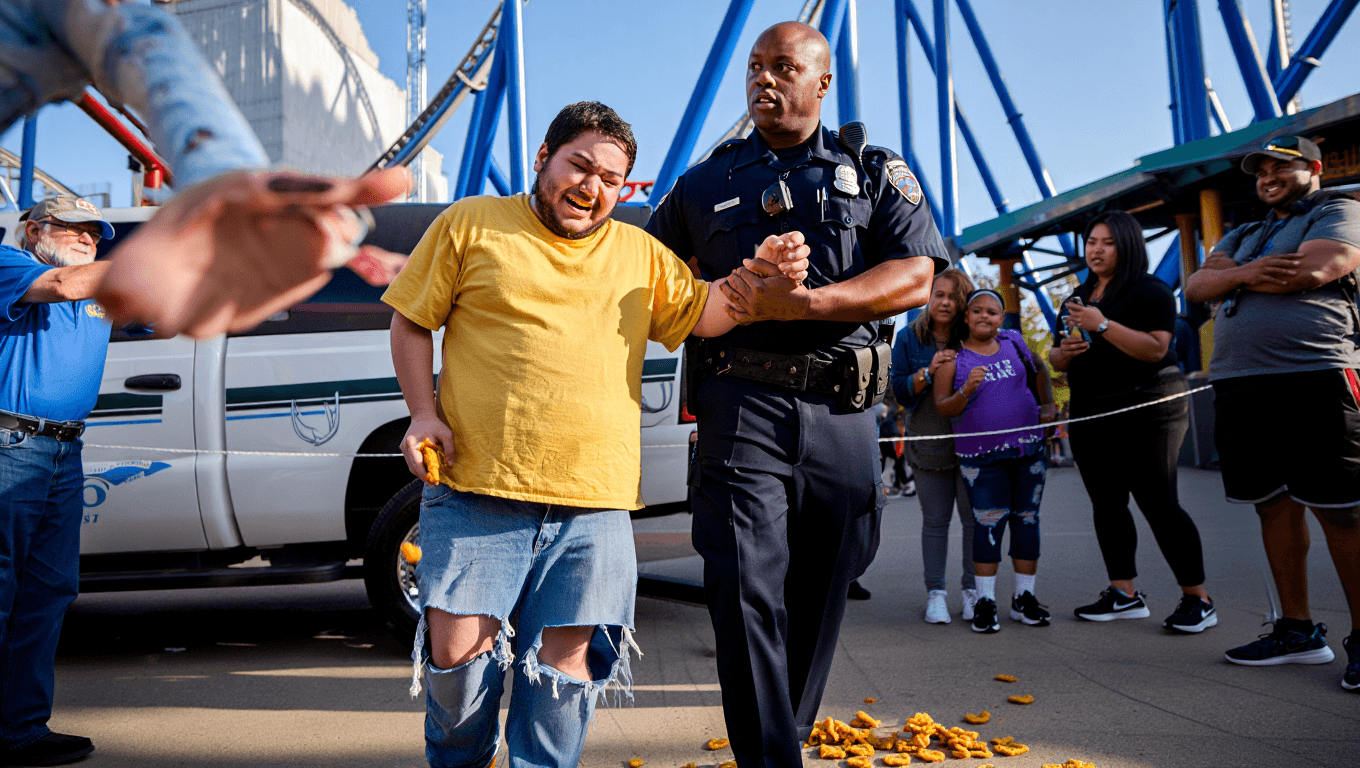
A recently posted video of a YouTuber attempting to eat a 10-piece McDonald’s Chicken McNuggets meal while riding Cedar Point’s Millennium Force has reignited debate over social-media stunts at theme parks. The clip, which the creator says led to lifetime bans from multiple parks, underlines the collision between viral content-seeking and operator safety rules.
Allen Ferrell filmed the challenge after a fan dared him; he brought the nuggets into the park and opened the container mid-ride. The footage shows little more than someone trying to eat while strapped into a coaster seat — a messy, awkward attempt that didn’t conclude before the train returned to the station.
What the video shows — and why parks reacted
The short video captures the coaster’s high-speed twists and a few sauce splatters as Ferrell tries to hold food and a dipping cup while the train zooms along. He doesn’t finish all 10 nuggets during the ride, which lasts roughly two minutes and 20 seconds from dispatch to the final brakes.
Park officials responded quickly, and Ferrell posted that he’d been hit with a ban from several amusement-park operators. Company spokespeople have not released detailed public statements tied to this particular clip, but the reaction fits standard industry practice.
Amusement parks maintain strict rules about loose items and guest conduct because the stakes are more than just ruined snacks.
- Loose items: Small objects can become dangerous projectiles at high speed and endanger riders or staff.
- Choking and medical risk: Eating while subjected to strong forces raises the risk of choking or aspiration.
- Distraction: Guests focused on filming or performing stunts can ignore safety instructions or interfere with attendants.
- Liability: Operators face legal and insurance exposure if a stunt causes injury or damage.
Those concerns explain why parks often resort to removal and bans rather than fines alone. A lifetime ban is one of the clearest, most enforceable measures available to property managers seeking to deter repeat behavior.
Why the episode matters beyond a viral clip
Stunts like this have two immediate implications: they prompt tighter enforcement of park rules and shape what content creators consider acceptable risks for views. For visitors, the incident is a reminder that personal stunts can affect others’ safety and the operations of the park.
For operators, policing behavior is increasingly part of everyday security work: monitoring guest compliance, training staff to spot stunt attempts, and applying consistent consequences when rules are broken. That administrative burden grows as creators chase attention on platforms that reward shock and novelty.
Some creators treat publicized bans as a form of notoriety, but the practical outcome for most guests is loss of access and potentially more scrutiny at future venues. Parks say they prioritize guest safety and the integrity of rides over the fleeting appeal of viral footage.
As social-media stunts continue to surface, parks and visitors face a choice: tolerate attention-seeking that endangers people and equipment, or enforce rules that keep experiences safe for everyone. The latest video is a small incident, but it’s part of a larger pattern that could shape park policies and creator behavior going forward.
Similar Posts
- Dinoconda 4D coaster claims speed crown: riders left shaken and screaming
- Florida Woman Arrested for Chihuahua Sexual Assault: Sold Disturbing Video on Snapchat!
- Mall contest prompts toilet-drinking stunt as contestants vie for cash
- Laundry Showdown: Man’s Washing Routine Ignites Fierce Online Debate!
- Twin Telepathy Confirmed? Viral Interview with Identical Twins Sparks Debate!

Miles Harper focuses on optimizing your daily life. He shares practical strategies to improve your time management, well-being, and consumption habits, turning your routine into lasting success.