
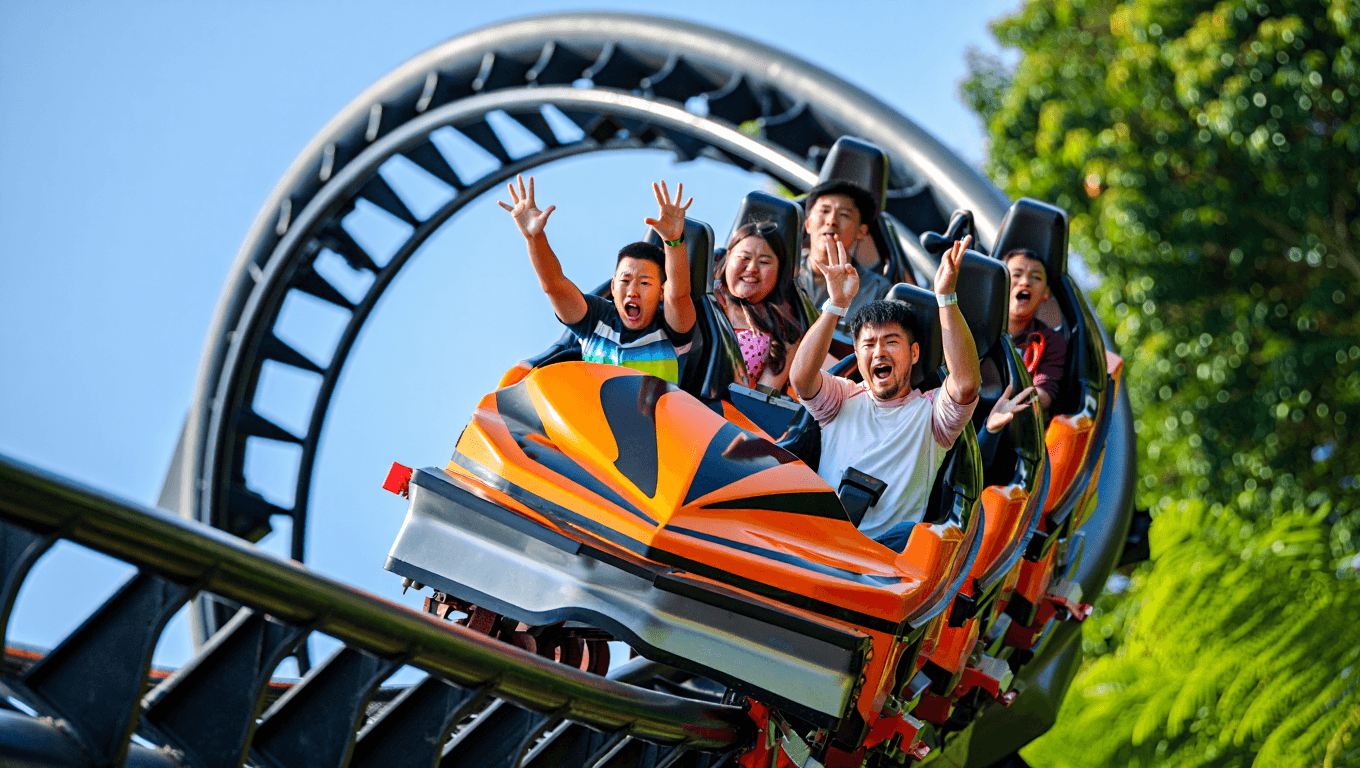
A viral point-of-view clip and decades of engineering have kept one of China’s most extreme rides in the spotlight: Dinoconda, a 4D roller coaster at China Dinosaurs Park, still claims records that matter to thrill-seekers and park operators alike. Beyond height and speed, the attraction rewrites the rules of what feels disorienting, a fact underscored by recent online footage that has reignited interest in the ride.
What makes this ride different
Dinoconda is not only tall and fast; it rotates the rider’s frame independently of the track. That extra axis of motion changes how your body interprets loops, drops and twists, so the sequence of forces feels novel every time. Instead of predictable airtime or a single intense launch, the coaster’s mechanics produce a constant reshuffling of orientation.
The effect is deliberate: small motors and auxiliary rails that act on each car rotate the seats during the run, so passengers can face forward, backward, upside-down or anywhere in between without warning. Riders are secured by over-the-shoulder restraints as the train negotiates tightly spaced elements and sustained forces that many enthusiasts describe as relentless rather than momentary.
Key ride data
| Attribute | Specification |
|---|---|
| Model | 4D coaster by S&S Worldwide (designed by Alan Schilke) |
| Opened | 2012 (China’s first 4D coaster) |
| Height | 226 feet |
| Track length | 3,445 feet |
| Top speed | 78.3 mph |
| Maximum force | Up to 5 Gs |
| Capacity per train | 24 riders (six cars, four per car) |
| Rarity | One of only three operating 4D hypercoasters worldwide |
What riders actually feel
- Seat rotations occur independently of the track, so familiar elements—drops, inversions, rolls—land differently each ride.
- Tight spacing between elements keeps forces continuous rather than isolated peaks.
- Sustained lateral and vertical loads, combined with sudden rotational changes, intensify the sense of unpredictability.
- Over-the-shoulder harnesses maintain safety while allowing the dynamic motion designers intended.
A point-of-view video from a popular coaster channel provides a visceral preview: viewers repeatedly say the footage creates a queasy anticipation that often convinces casual observers to skip a trip—or, conversely, to plan one.
How Dinoconda compares to other 4D coasters
Japan’s Eejanaika at Fuji-Q Highland follows a similar concept—individual seat rotation synchronized with the track—but riders note differences in pacing and force profile. Dinoconda tends to emphasize tighter sequencing and longer bouts of strong acceleration, which can make the experience feel more sustained and, for some, more intense.
That distinction matters for parks and designers aiming to balance novelty, throughput and perceived safety. A smoother mechanical ride that still delivers forceful sensations appeals to a specific segment of enthusiasts willing to travel for unique coaster engineering.
For visitors unsure about booking a trip to Changzhou, the video preview offers a no-cost way to assess whether Dinoconda is an attraction they want to tackle in person.
Similar Posts
- Six Flags removes guest after chicken nugget stunt on roller coaster
- Disney World Lawsuit: Man Claims ‘Permanent Catastrophic Injuries’ After Ride
- Universal Studios Japan debuts adults-only R18 scare attraction: waiver required
- Waymo alerts police after teens drank and fired toy guns in its autonomous vehicle
- Jeddah Tower tops 100 floors: now racing to a 3,280-foot height by 2028

Miles Harper focuses on optimizing your daily life. He shares practical strategies to improve your time management, well-being, and consumption habits, turning your routine into lasting success.