
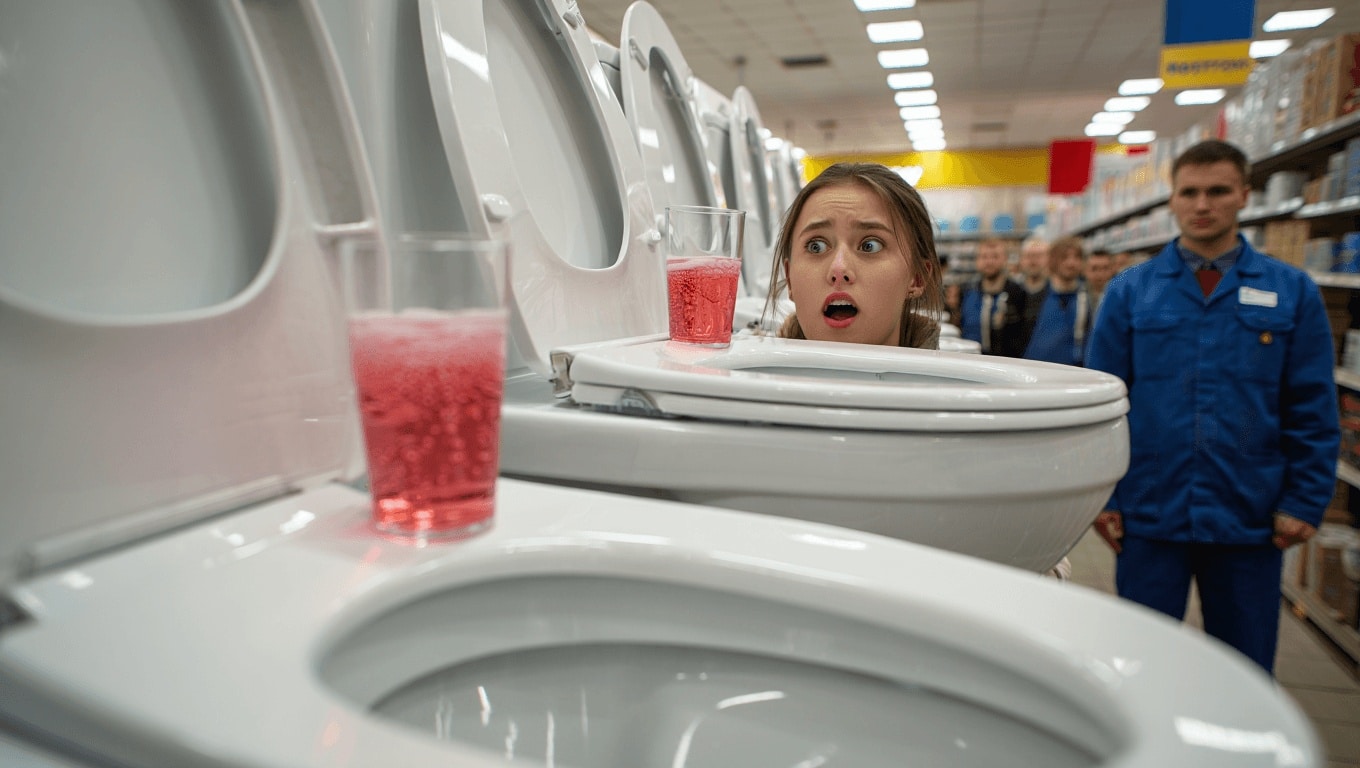
A plumbing store in southern Russia drew rapid online attention — and local backlash — after staging a contest that asked participants to drink a sparkling nonalcoholic beverage from brand-new toilets. The stunt, billed as a promotional event, raised questions about marketing tactics, public image and hygiene at a moment when anything that goes viral can quickly become a reputational problem.
Video clips show competitors bent over rows of pristine white fixtures in a busy mall, drinking through oversized straws and racing for cash. Organizers said the toilets were unused and drinks were served in cups placed inside the bowls, but many residents of Stavropol voiced disgust and said the event made the city look bad.
How the contest worked
According to event footage and organizer statements, the promotion staged by a local plumbing retailer called Domix had two distinct phases. Dozens of entrants were sorted into heats, and winners moved on to a final endurance round.
| Location | Shopping mall in Stavropol |
|---|---|
| Organizer | Domix (plumbing retailer) |
| Prize | 100,000 rubles (about $1,276) |
| Format | Fastest to drink sparkling beverage from new toilets; final round: last person seated on a closed toilet seat |
| Hygiene claim | Drinks poured into cups inside unused fixtures; organizers said event was sanitary |
Key facts
- Participants competed in groups of seven; winners from each group advanced to the next round.
- The final stage involved contestants sitting on closed toilet seats; the last person seated would win the cash prize.
- Organizers reported the event stretched over roughly ten hours and that very few contestants withdrew.
- Footage circulated widely on social platforms, generating both amusement and criticism.
Stunts like this are increasingly common as brands try to cut through online clutter. Marketing experts note that provocative or emotionally charged content often spreads faster than neutral material — meaning a controversial stunt can deliver quick visibility even while it harms long-term goodwill.
Why this matters now
The episode highlights a couple of immediate concerns for consumers and local officials. First, there is the risk to civic reputation: what happens in a small city square or shopping center can define public perception far beyond the locality when amplified online. Second, it raises questions about where companies draw the line between creative promotion and actions that many people find degrading or unhygienic.
Neither local health authorities nor municipal officials were reported as intervening at the time of the event. Organizers defended their safety measures, but public reaction suggests that assurances about cleanliness did not reassure many residents.
Broader implications
There are several potential consequences worth watching:
- Reputational fallout for the retailer and the mall if public outcry continues.
- Possible follow-up from consumer-protection or health regulators if complaints escalate.
- Copycat risks — other businesses may try similar stunts, increasing scrutiny on promotional ethics.
The contest’s winner, and whether the top prize was ultimately awarded, has not been independently confirmed in reporting. Organizers said only a handful of participants left before the competition ended.
At a minimum, the incident is a reminder that in today’s media environment even local promotions can become national or international talking points — and that publicity gained through shock or disgust can carry costs that outlast a viral clip.
Similar Posts
- Margarita world record broken on cruise as passengers downed dozens in 8 hours
- Pepsi vs. Coke Showdown: Which Soda Reigns Supreme?
- Florida eatery swaps pizza for captured pythons to help fight invasive snakes
- 92-Year-Old Galápagos Tortoise Delivers First Baby: Breaks Record as Oldest New Mom!
- Cliffside cafe labeled world’s riskiest coffee destination: visitors keep coming

Miles Harper focuses on optimizing your daily life. He shares practical strategies to improve your time management, well-being, and consumption habits, turning your routine into lasting success.