
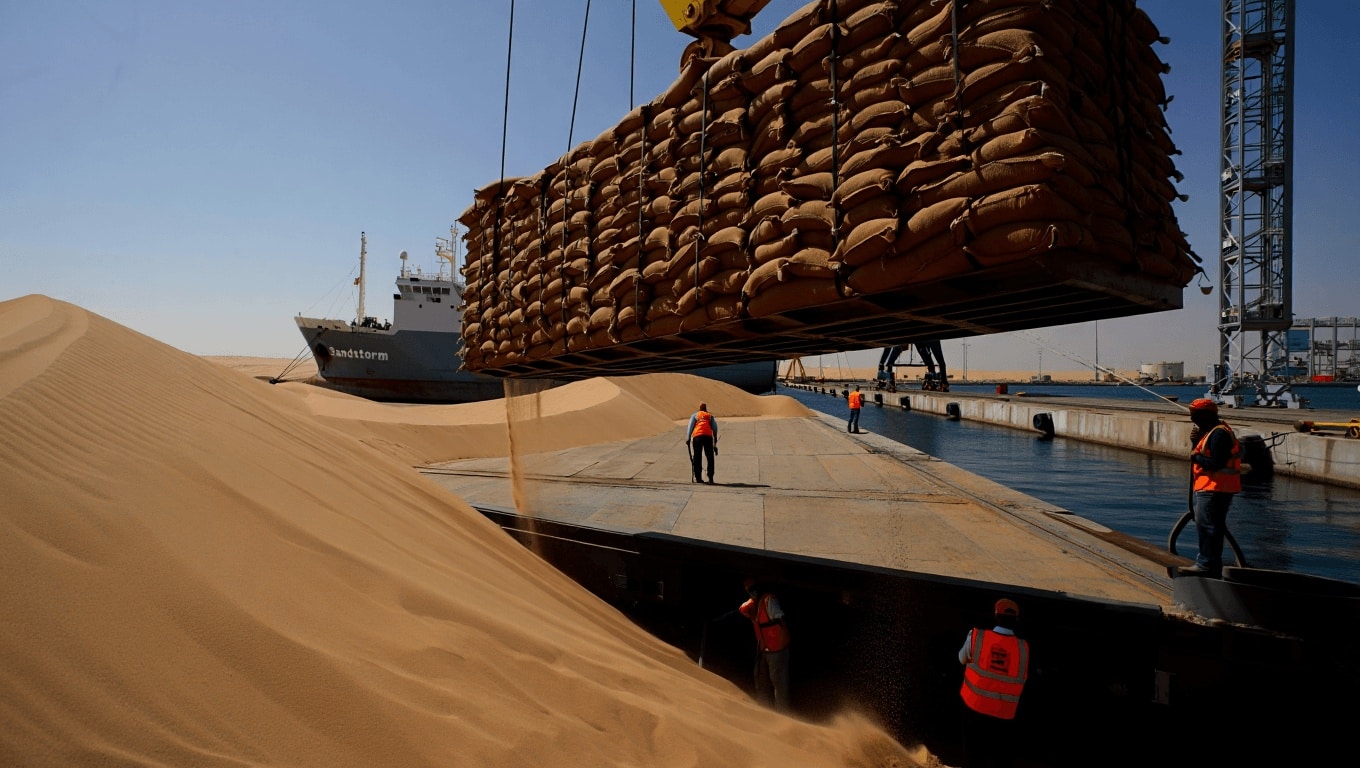
Saudi Arabia continues to buy sand from overseas despite its sweeping deserts, because the grains that blanket its dunes simply don’t make reliable concrete. As the kingdom pushes ahead with megaprojects and urban expansion tied to Vision 2030, demand for suitable construction aggregate has surged — and desert sand can’t meet the technical or environmental needs of modern building.
Why desert sand isn’t good for concrete
At first glance, it seems counterintuitive: a country of endless sand should be self-sufficient. But the problem is not quantity; it’s grain shape and texture. Sand from dunes is typically very smooth and rounded, worn down by wind over millennia. Those rounded grains don’t interlock well with cement paste, which reduces the mechanical bond that gives concrete its strength.
Concrete needs an aggregate with angular grains that lock together and form a stable matrix. Engineers prefer sand with rougher, irregular particles or crushed stone that provides mechanical interlock. Using the wrong type of sand can lead to weaker mixes, greater cement demand to compensate, and ultimately higher costs and shorter lifespans for structures.
What Saudi builders are using instead
To meet construction standards, developers turn to alternatives that perform in concrete and survive harsh climates. Common options include:
- Crushed rock and quarry sand: Produced by mechanically breaking down stone, these particles are angular and bond well in concrete.
- Coastal and river sand: Often used where permitted, though these sources face stricter environmental controls.
- Manufactured sand (M-sand): Engineered from crushed rock and sized for concrete applications; it’s becoming more common as demand rises.
- Recycled construction aggregate: Crushed concrete and masonry from demolition can replace natural sand in many mixes.
| Sand type | Grain shape | Suitability for concrete | Typical source |
|---|---|---|---|
| Desert sand | Very rounded | Poor — weak interlock | Dunes |
| River/beach sand | Mixed; often smoother | Moderate — sometimes requires treatment | Rivers, coasts |
| Crushed rock / M-sand | Angular, rough | High — preferred for structural concrete | Quarries, manufacturing plants |
| Recycled aggregate | Variable | Moderate to high — depends on processing | Construction and demolition waste |
Economic and environmental stakes
Importing construction-quality sand adds expense and complexity to Saudi projects. Shipping, customs and supply-chain pressures can inflate project budgets and timelines. At the same time, global demand for usable sand has environmental consequences: dredging riverbeds and seabeds can damage ecosystems, while quarrying can scar landscapes.
Those trade-offs matter in the Gulf, where governments are balancing an ambitious building agenda with sustainability goals. The drive to import, produce, or recycle suitable sand affects local economies, regional resource politics, and the long-term durability of new developments.
Where this is headed
Expect continued investment in local production of engineered sand and expanded recycling programs as an effort to reduce dependence on foreign shipments. Advances in material science — including optimized mix designs and alternative binders — could also ease pressure on high-quality natural sand supplies.
For residents and investors, the practical takeaway is straightforward: the sand underfoot doesn’t always equal a ready-made construction material. That reality shapes costs, environmental trade-offs, and the resilience of the rapid building that defines today’s Saudi urban growth.
Similar Posts
- Jeddah Tower tops 100 floors: now racing to a 3,280-foot height by 2028
- Egypt plans new desert city with 1,312-foot tower: bold project aims to reshape urban growth
- World’s biggest floating city resumes operations: homes, schools and helipads for 80,000
- Sao Paulo immersed tunnel $1.35B project to upend how the city builds underwater
- World’s largest floating city reopens: 80,000 residents, stadium, schools and eight helipads

Calvin Baxter is an economic analyst specializing in the evolving US labor market. He leverages real data to provide you with concrete recommendations and help you adjust your professional strategies.