
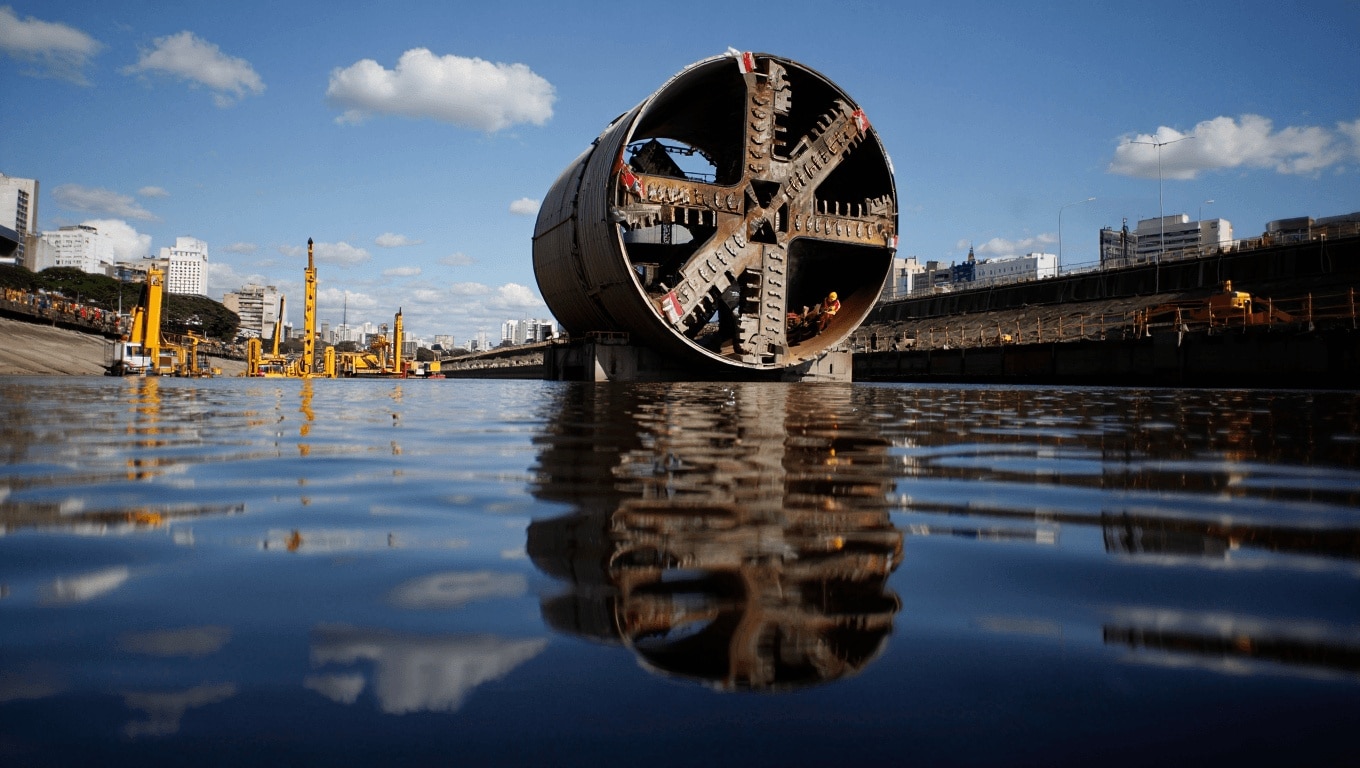
São Paulo has revealed plans for a roughly $1.35 billion megaproject that would create Brazil’s first immersed tunnel, a 0.93‑mile underwater link designed to cut travel times and reshape the city’s approach to river engineering. The announcement forces immediate attention on logistics, environmental permits and the specialized equipment the city will need to borrow from global marine contractors.
Unlike bored or cut‑and‑cover tunnels, an immersed tunnel is built from large, prefabricated sections floated into position, sunk into a dredged trench and joined under water. That method can be faster in constrained urban waterways, but it shifts complexity to maritime operations: anchoring, heavy lifts, sediment handling and precise underwater alignment.
What the project will demand
City planners and engineers will have to coordinate a chain of tasks not common in Brazil’s inland construction industry. Temporary staging areas for assembly, dredging and spoil disposal, as well as access for specialized tugs and heavy‑lift cranes, all become critical path items.
- Estimated cost: about $1.35 billion, according to municipal figures.
- Length: 0.93 miles of submerged tunnel.
- Construction method: immersed tube made from prefabricated tunnel elements floated, lowered and joined in a prepared trench.
- Main challenges: dredging and sediment management, environmental permitting, utility relocation, traffic staging and specialized marine logistics.
- Procurement model: officials indicate a likely role for private partners, suggesting a public‑private partnership or international contractor consortium.
Environmental review will be under intense scrutiny. Dredging can disturb contaminated sediments, alter river flows and affect aquatic habitats. Regulators will require mitigation plans and long‑term monitoring, and opponents may press for stricter safeguards or alternative designs.
Engineering and safety considerations
Immersed tunnels rely on watertight joints, robust backfill and continuous monitoring to remain safe over decades. That means higher upfront technical oversight and a maintenance regimen that differs from traditional road or metro tunnels. Ventilation, emergency egress and fire suppression systems must be integrated from the start.
The project will also test São Paulo’s logistical capacity: contractors must assemble large concrete segments, move them by water and install them with centimeter‑level accuracy. That requires internationally sourced equipment and experienced crews — factors that can drive costs and influence which firms win contracts.
Timing is a variable. Engineers familiar with similar projects note timelines often stretch as permitting, environmental mitigation and complex marine operations intersect. The city has not published a final schedule; experts say comparable builds typically require several years from groundbreaking to opening.
Why this matters now
São Paulo’s announcement comes as the city grapples with chronic congestion and aging infrastructure. If completed, the tunnel could reroute traffic, connect key corridors and relieve pressure on bridges and surface roads. But the short‑term effects—construction noise, river traffic detours and shoreline staging—will be widely felt.
Beyond local traffic improvements, the project could set a precedent for how Brazilian cities tackle water crossings. Successful delivery would create a blueprint for future submerged links; setbacks would likely prompt tougher regulatory scrutiny on dredging, spoil management and contractor selection.
Next steps include finalizing environmental approvals, launching a tender process for construction, and arranging the specialized logistics that make an immersed tunnel possible. For São Paulo residents and regional planners, the coming months will reveal whether this ambitious idea becomes a model of urban innovation or a prolonged engineering challenge.
Similar Posts
- Latin America’s longest tunnel opens after decade-long build: ends mountain isolation
- Port of Recife $19.7M dredging to allow 689-foot ships: could shift regional trade
- Zuckerberg funds $30M hardened compound: 30 rooms, 95,000L tanks, 13-meter walls and 8-ton doors
- World’s biggest floating city resumes operations: homes, schools and helipads for 80,000
- World’s largest floating city reopens: 80,000 residents, stadium, schools and eight helipads

Calvin Baxter is an economic analyst specializing in the evolving US labor market. He leverages real data to provide you with concrete recommendations and help you adjust your professional strategies.